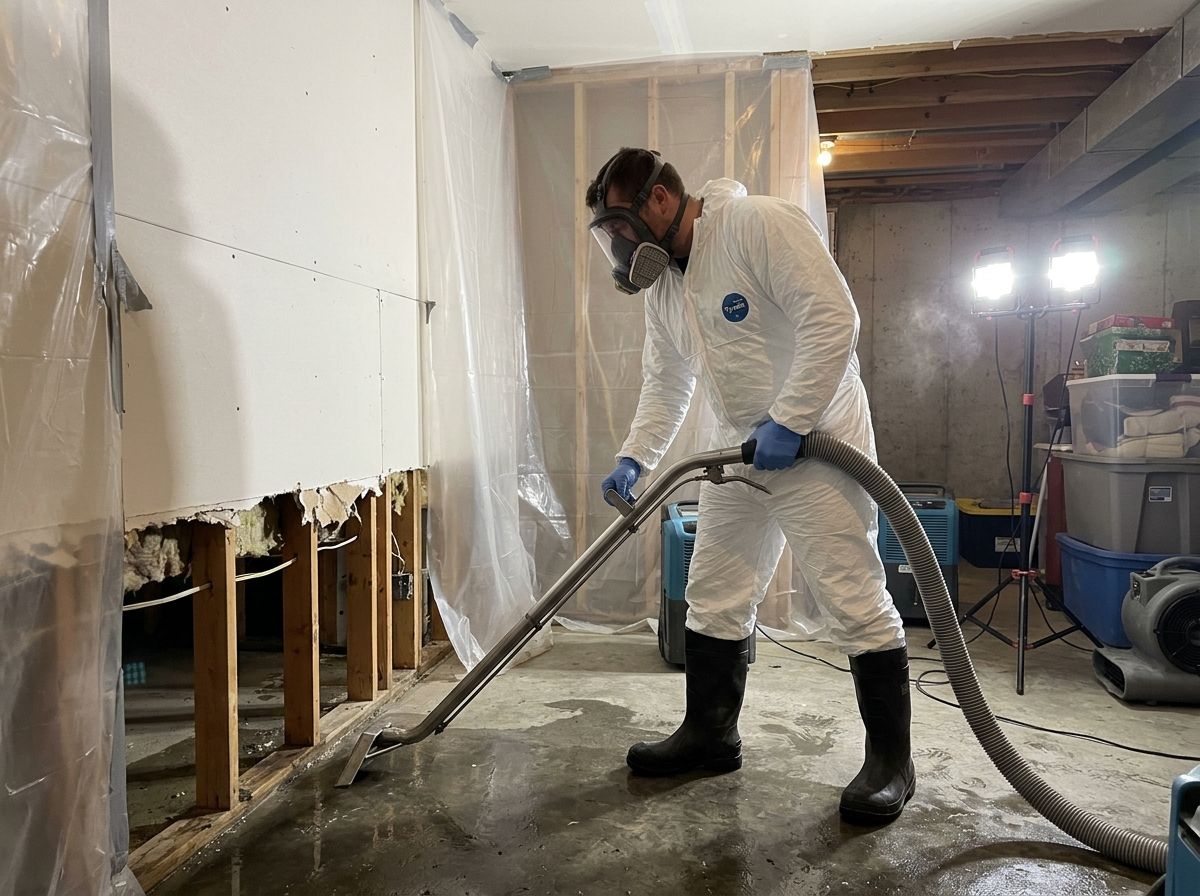
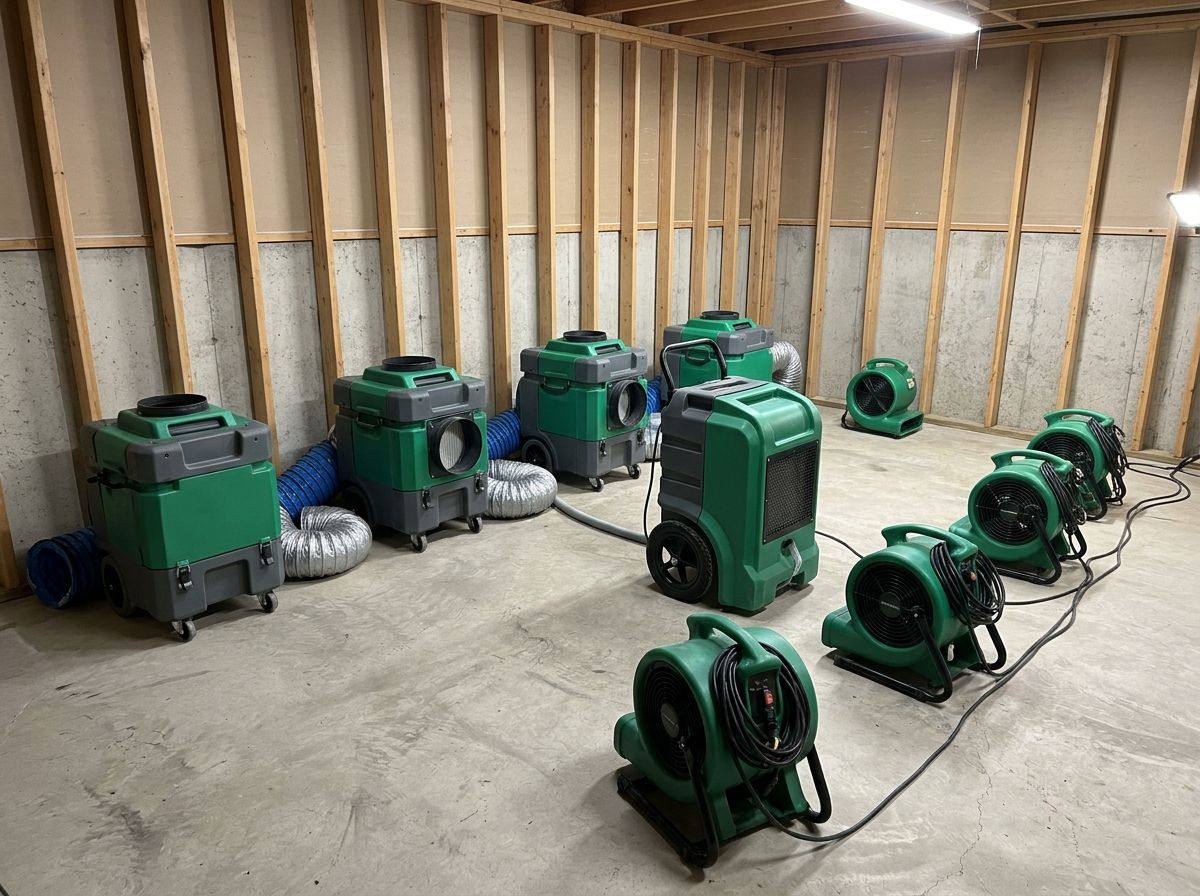
Containment barriers and controlled flood cuts protect finished Windsor basements.
Protecting Finished Basements Across Windsor (80550)
Directly west of Greeley along US-34 and SH-257, Windsor pairs historic neighborhoods near Main Street and Windsor Lake with expansive master-planned subdivisions like Water Valley, Highland Meadows, and RainDance. Most newer Windsor homes include spacious finished basements with guest suites, home offices, and carpeted family rooms sitting below street sewer grade.
When a main sewer lateral clogs or heavy Front Range storms surge local lines, Category 3 black water backs up into basement floor drains fast. Waiting until morning lets contaminated moisture wick inches up drywall and soak under bottom framing plates. Through our Greeley sewage cleanup dispatch, local crews reach 80550 quickly via US-34 and SH-257.
Local Backup Scenarios Around Windsor
Carpeted lower levels: Fast basement sewage cleanup to extract waste, haul ruined pad, and dry wooden studs before secondary mold forms.
Older downtown laterals: Mature trees near Main Street invade aging clay pipes, triggering sudden toilet and sewer line overflow events.
Deep odor neutralization: Commercial HEPA air scrubbers and sewage sanitization and odor removal stop sewer smells from lingering in finished rooms.
Immediate Steps Before Dispatch Arrives
Turn off your furnace or AC thermostat so return ducts do not spread airborne contaminants upstairs. Keep family members and pets out of the basement, avoid touching electrical outlets near damp flooring, and leave damaged items in place until technicians document the water line for your insurance carrier.
How do crews protect finished basements after a sewer backup in Windsor?
Technicians isolate the wet zone immediately, pump out standing black water, remove soaked carpet and pad, make clean 12-to-24-inch drywall flood cuts, scrub concrete with EPA-registered antimicrobials, and dry framing to verified meter readings.
What insurance documentation do Windsor homeowners receive after cleanup?
Independent crews capture clear water-line photos before tear-out, itemize removed porous materials, and record daily moisture logs so your adjuster has complete proof for sewer-backup endorsements.
Our 3-Step Sewage Containment & Drying Process
Raw sewage spreads pathogens and structural dampness quickly. Independent local crews follow three clear stages to restore safe, dry indoor spaces.
STEP 01 • CONTAINMENT
Containment & Safety Isolation
Technicians isolate Category 3 black water right away, shut off furnace and HVAC airflow, and seal clean rooms with heavy poly barriers.
STEP 02 • EXTRACTION
Extraction & Flood-Cut Tear-Out
Truck-mounted pumps pull out standing waste and sludge fast. Crews safely dispose of soaked carpet, pad, trim, and flood-cut drywall.
STEP 03 • SANITIZATION
Sanitization & Structural Drying
Hard surfaces receive EPA-registered antimicrobial scrubbing. HEPA air scrubbers and commercial dehumidifiers dry framing to verified moisture targets.
Containment sheeting, commercial pumping, and drywall flood cuts expose wet framing safely.HEPA air scrubbers and low-grain dehumidifiers clear sewer odors and dry exposed studs.