A backed-up basement floor drain ruins carpet, trim, and drywall within hours. Call 24/7 for rapid Greeley containment, waste extraction, and concrete disinfection.
Why Greeley Basements Face Sudden Floor Drain Backups
Across Glenmere, Bittersweet, Downtown Greeley, and the University District near 16th Street, 1960s and 1970s ranch homes sit over full basements with laundry tubs and gravity floor drains tied into aging clay or cast-iron sewer laterals. Meanwhile, newer two-story homes in West Greeley, Promontory, and Stoneybrook feature finished basements with plush carpet, bedrooms, and media rooms.
Colorado Front Range freeze-thaw cycles and expansive Weld County clay soil shift underground sewer pipes slowly over time. When mature cottonwood or elm roots invade a cracked joint, household wastewater backs up through the lowest basement drain first. Calling Greeley sewage cleanup immediately limits how far Category 3 black water spreads across finished flooring and wall framing.
Electrical and Health Safety Before Crews Arrive
Never wade into murky basement water without checking electrical and respiratory risks first:
Respect submerged power: Stay completely off wet concrete near furnaces, water heaters, sump cords, or wall outlets.
Shut off your furnace and central air: Running the blower fan pulls basement sewer gases and airborne droplets straight into upstairs bedrooms.
Pause all household water: Stop flushing toilets, running dishwashers, or draining laundry machines until the main lateral clears.
Keep kids and pets upstairs: Close the basement door tightly and lay a damp towel along the threshold to slow odor drift.
Skip shop vacs and household bleach: Standard wet vacs aerosolize contaminated mist, and bleach cannot disinfect porous drywall or wood.
How Local Crews Clean Flooded Greeley Basements
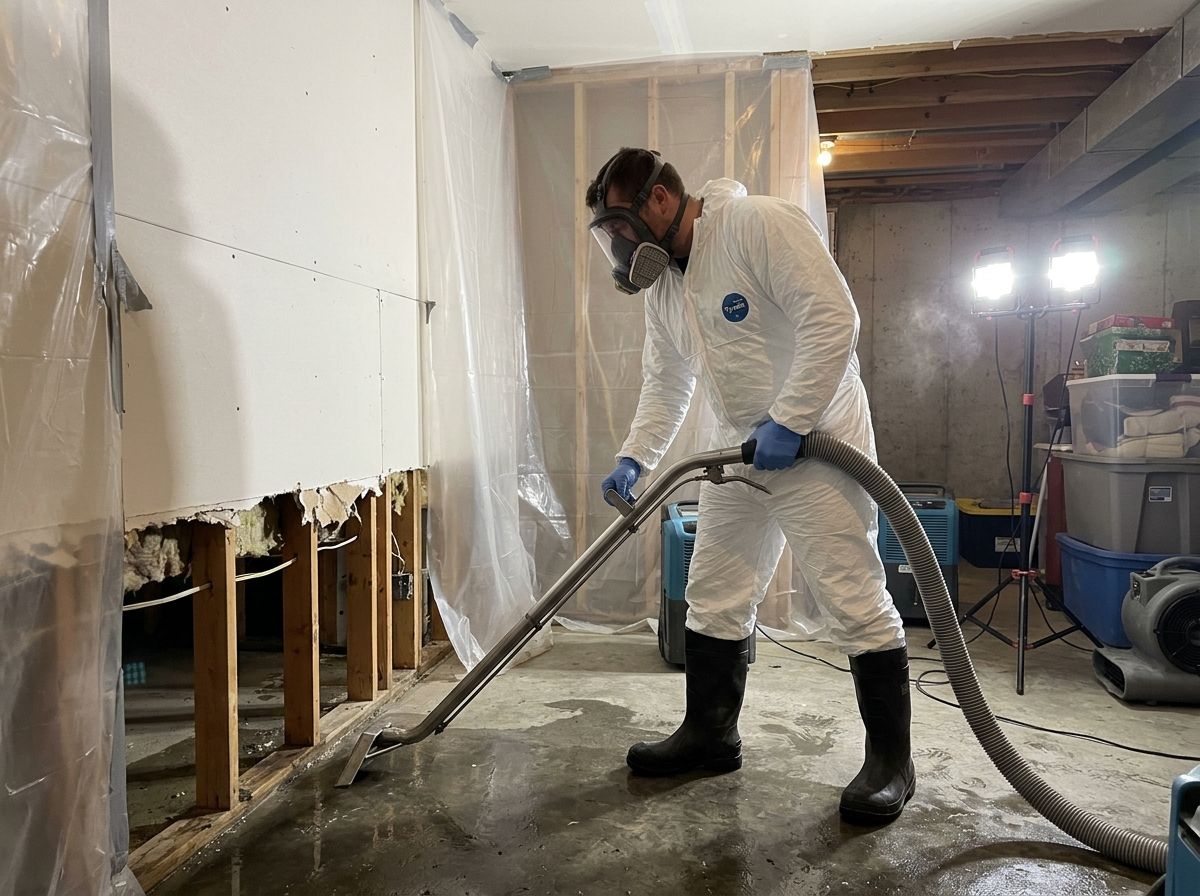
Independent local restoration technicians arrive with full protective suits, containment poly, and truck-mounted vacuum equipment built for raw sewage:
1. Bulk Black-Water Pumping and Sludge Removal
Technicians pump out standing liquid and solid debris from concrete slabs, utility rooms, sump pits, and carpeted rec rooms.
2. Clean 12-to-24-Inch Drywall Flood Cuts
Porous materials trap sewage bacteria permanently. Crews safely remove ruined carpet, pad, baseboards, and wet drywall 12 to 24 inches above the water mark so bottom wood plates and wall studs dry cleanly.
3. Concrete Scrubbing and Verified Drying
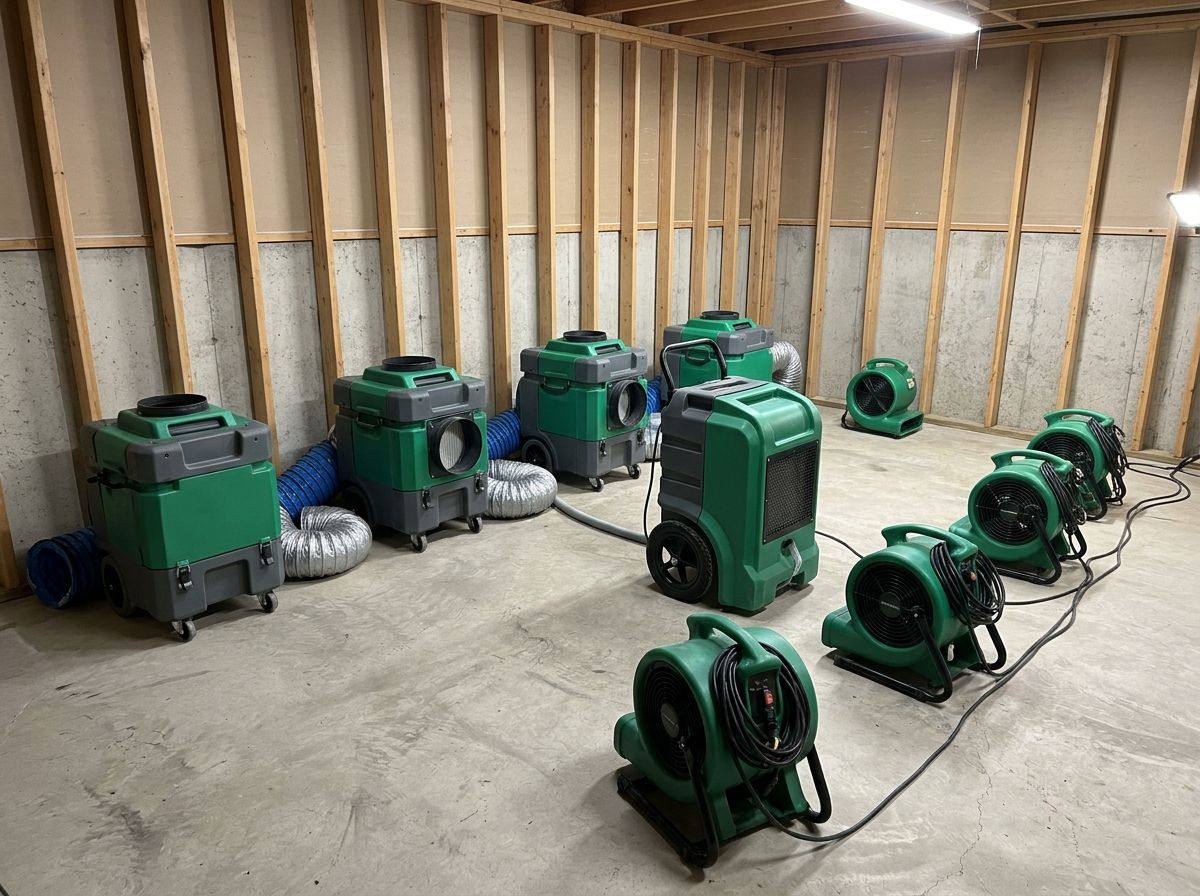
Hard concrete floors and block foundation walls are scrubbed and treated with EPA-registered antimicrobials. Commercial low-grain dehumidifiers and axial air movers then dry framing to verified meter readings.
Insurance Documentation for Finished Basements
Do not haul ruined basement furniture or rolled-up carpet to the curb before crews photograph the water line. Detailed photo logs, tear-out inventories, and daily moisture charts make sewer-backup claims far smoother. If odors linger after pumping, follow up with sewage sanitization and odor removal.
Should I step into basement sewage to shut off my electrical breakers?
No. Standing black water conducts electricity from submerged floor outlets, deep freezers, and furnace wiring. Stay on dry basement stairs and call a licensed electrician or utility shutoff if your panel sits inside the wet zone.
Why do Greeley crews cut drywall 12 to 24 inches above the water line?
Drywall wicks contaminated sewage upward like a paper towel. Cutting cleanly above the damp line removes bacteria-soaked gypsum and opens wet wooden studs and sill plates for antimicrobial scrubbing and structural drying.
Does homeowners insurance cover a basement sewer backup in Greeley?
Many standard Colorado policies require a separate water and sewer backup endorsement. Responding crews capture water-line photos, itemized tear-out logs, and daily moisture charts so your adjuster receives clear documentation.
Our 3-Step Sewage Containment & Drying Process
Raw sewage spreads pathogens and structural dampness quickly. Independent local crews follow three clear stages to restore safe, dry indoor spaces.
STEP 01 • CONTAINMENT
Containment & Safety Isolation
Technicians isolate Category 3 black water right away, shut off furnace and HVAC airflow, and seal clean rooms with heavy poly barriers.
STEP 02 • EXTRACTION
Extraction & Flood-Cut Tear-Out
Truck-mounted pumps pull out standing waste and sludge fast. Crews safely dispose of soaked carpet, pad, trim, and flood-cut drywall.
STEP 03 • SANITIZATION
Sanitization & Structural Drying
Hard surfaces receive EPA-registered antimicrobial scrubbing. HEPA air scrubbers and commercial dehumidifiers dry framing to verified moisture targets.
Containment sheeting, commercial pumping, and drywall flood cuts expose wet framing safely.HEPA air scrubbers and low-grain dehumidifiers clear sewer odors and dry exposed studs.
Greeley Areas Covered for Basement Sewage Cleanup
Emergency dispatch reaches homes and commercial properties across Greeley ZIP codes 80631, 80634 around the clock.